Home › Concrete Slab Installation
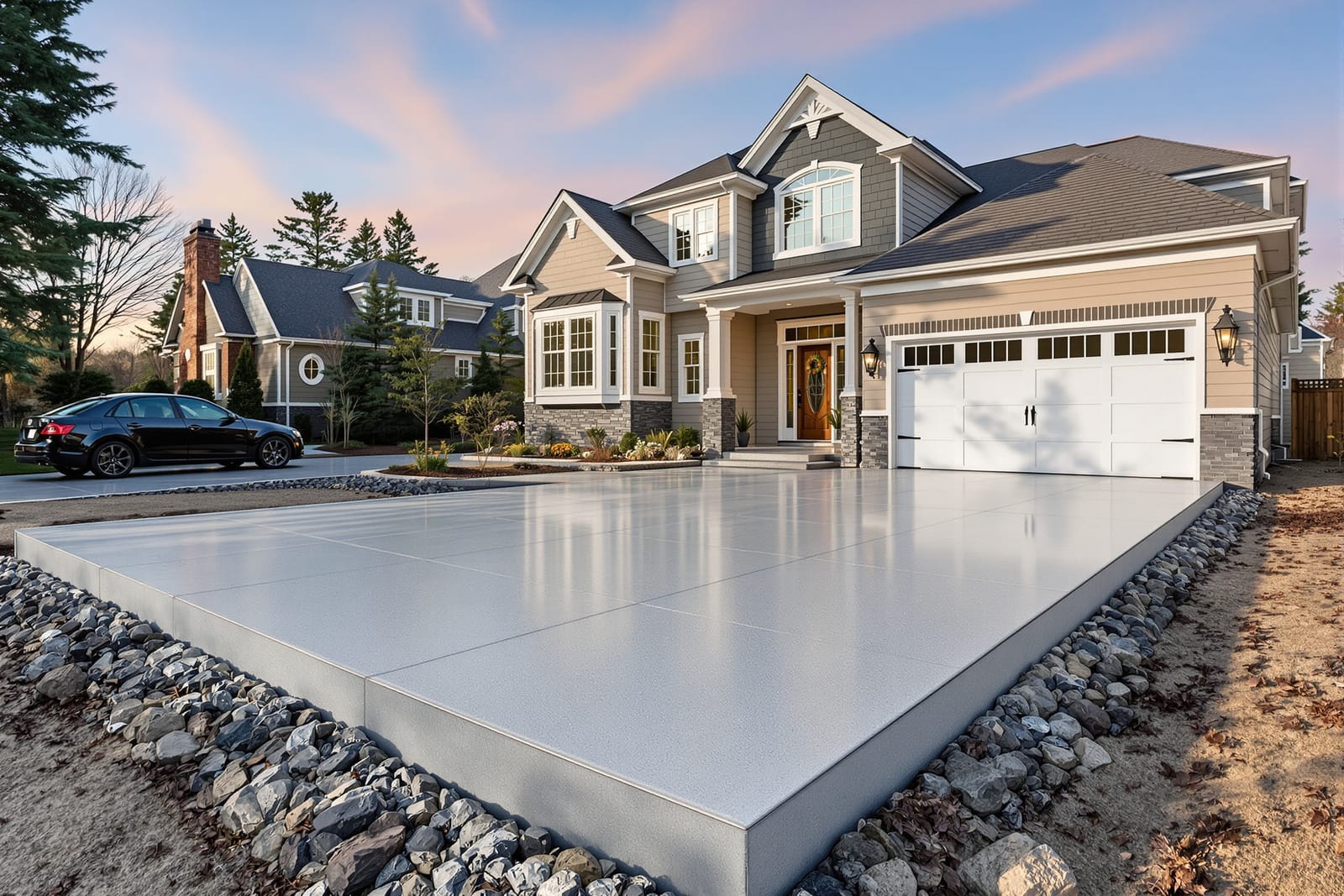
Get a strong, level concrete slab in Raleigh, NC for your shed, garage, or home addition. We handle excavation, base compaction, reinforcement, and finishing so your slab meets thickness and strength requirements for its intended use.
Superior Concrete Raleigh provides professional concrete slab throughout Raleigh, NC, North Carolina and the surrounding area. Our licensed, insured crew delivers safe, clean, on-time work with a free estimate before anything begins. Call (984) 342-0629 or request your free quote.
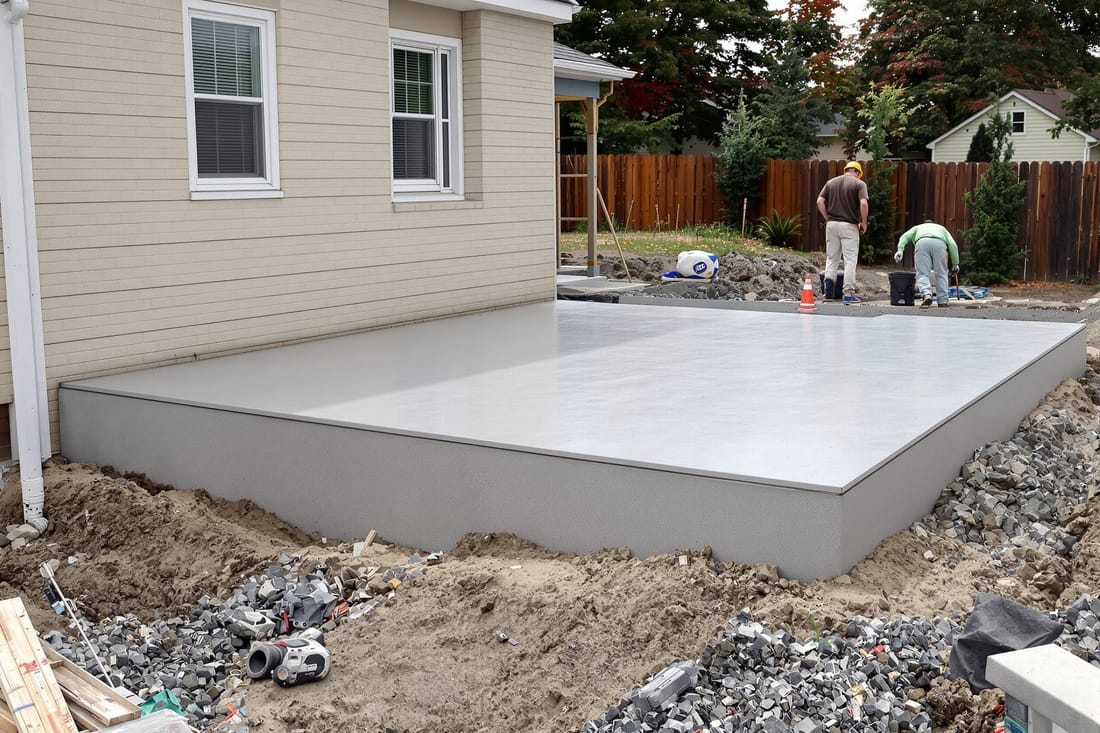
Concrete slab expertise for Raleigh homes and businesses
When you hire Superior Concrete Raleigh for a concrete slab, you are getting a crew that does this work all week long in Raleigh’s specific soil and weather conditions. We are not just pouring gray rectangles. We build slabs that support real-life loads, deal with clay and moisture, and stay level for years.
We install concrete slabs for garages, workshops, patios, sheds, room additions, hot tubs, HVAC pads, dumpster pads, small warehouses, and light commercial buildings. Before we talk pricing, we ask what the slab will support, whether you plan to enclose the space, and how you want to finish the surface. A slab that will hold a parked pickup truck is designed differently than a backyard seating area or a walk-in cooler.
Local knowledge matters in Raleigh. Many neighborhoods sit on red clay that shrinks and swells with moisture. Some areas near creeks or low spots have higher water tables and need better drainage planning. At Superior Concrete Raleigh we adjust base depth, reinforcement, and control joint layouts to match what we see in your yard or lot, not just what is on a generic plan.
We are happy to walk the site with you, flag potential issues like existing tree roots, soft spots, or drainage problems, and give you straightforward options instead of surprises on pour day.
How we install a concrete slab step by step
A durable concrete slab starts long before the truck shows up. Here is how Superior Concrete Raleigh typically handles an installation in the Raleigh area.
1. Site visit and layout: We confirm property lines and setbacks so you do not create a code problem. Then we mark out the slab size with paint or string lines, check elevations, and decide where water should run off. In Raleigh’s heavier rains, we always pitch exterior slabs slightly away from foundations and toward a safe drainage area.
2. Excavation and subgrade prep: We remove grass, roots, topsoil, and soft material down to stable ground. For many residential slabs this is 4 to 8 inches below finished grade. If we encounter weak or saturated clay, we dig a little deeper and bring in compactable stone so the slab does not sink or crack later.
3. Base and compaction: We install a layer of compacted aggregate, often ABC stone or similar material, and compact it in lifts with a plate tamper. A solid, well compacted base is critical in our freeze and thaw cycles and during long rainy spells. In some low lying Raleigh yards, we add a thicker base to help with drainage and stability.
4. Forms and reinforcement: We build wood or metal forms to define the slab shape and correct height. Then we install reinforcement that fits the use. That can be rebar grid, welded wire mesh, or in some cases fiber reinforced concrete. For garage slabs we typically recommend rebar around the perimeter and thicker edges where vehicle tires will sit.
5. Vapor barrier and thickened edges (when needed): For interior slabs or enclosed additions we usually lay a plastic vapor barrier under the concrete to help control moisture migration. Where loads are high or walls will sit on the slab, we may form thickened edge beams so the slab acts more like a footing.
6. Pouring and finishing: We schedule the concrete truck to match weather and site access. Our crew places the concrete, levels it with screeds, then uses bull floats and trowels for the proper finish. On exterior slabs in Raleigh’s humid climate, we are careful not to overwork the surface, which can seal in water and cause scaling later.
7. Control joints and curing: Before the concrete fully hardens, we cut or tool control joints at calculated intervals so natural cracking follows straight grooves instead of random lines. We then apply curing methods, such as a curing compound or light water misting, so the slab gains strength evenly without surface cracking.
Design and finish options for your new concrete slab
Concrete slabs do not have to be plain. Superior Concrete Raleigh offers design choices that match how you plan to use the space and how you want it to look.
Thickness and strength: Most basic residential slabs in Raleigh are 4 inches thick with 3000 to 3500 psi concrete. For driveways, RV pads, or shop floors with heavier equipment, we often recommend 5 to 6 inches and higher strength mixes. We will talk through what will sit on the slab so you are not paying for unneeded strength or risking underbuilding.
Reinforcement options: For patios and light duty areas, welded wire mesh or fiber mesh concrete can be enough. For garages, hot tub pads, and small commercial slabs, we usually add rebar in a grid pattern and may thicken edges. If you are placing a heavy safe, machinery, or a masonry fireplace, we can design extra reinforcement exactly where it is needed.
Surface finishes: For most patios and walkways, a broom finish provides traction and a clean look. For interior or shop slabs, we can provide a steel trowel finish ready for epoxy, sealer, or floor coverings. If you want a more decorative look outdoors, we can add color to the mix or apply a stain later, then seal it to better handle Raleigh’s sun and humidity.
Drainage and slopes: On exterior slabs, we usually build in at least a slight pitch so water does not sit against your house or garage. For areas that see frequent washing, like dog runs or cleaning stations, we may suggest a stronger slope and a drain location planned into the formwork.
Embedded features: While the slab is being formed and poured we can accommodate anchor bolts, conduit, plumbing stubs, future wall layouts, and even sleeves for electrical runs. If you know you want an outdoor kitchen, pergola posts, or a future addition, planning those details now is cheaper than cutting and patching concrete later.
What affects concrete slab pricing in Raleigh
Two slabs that look similar from the street can cost very different amounts. Superior Concrete Raleigh is upfront about what drives the price so you understand where your money is going.
Size and thickness: Concrete is sold by the cubic yard, so both the square footage and thickness matter. A 20 by 20 foot slab that is 6 inches thick uses 50 percent more concrete than one that is 4 inches thick. When we quote, we break out the size and thickness so you can see how design decisions change the budget.
Site conditions and access: A flat, open backyard with a wide gate is faster and cheaper to work in than a tight space behind a fence with many steps. If we need to wheel concrete long distances, use a pump truck, or haul out a lot of unsuitable soil, labor and equipment time go up. During the site visit we point out any access challenges and give you clear options.
Base and reinforcement: Extra stone base, vapor barriers, heavy rebar grids, and higher strength concrete mixes all add to material cost, but they can be necessary in softer soils or for heavier loads. In some Raleigh neighborhoods with poor drainage, we may strongly recommend thicker base material to avoid future slab movement.
Finishes and add ons: Decorative finishes, saw cut patterns, colored concrete, or special edge details increase labor time. If the slab has to meet specific commercial specs or accommodate plumbing and electrical, we coordinate with your other contractors, which adds planning time but prevents costly rework.
Timing and weather: Raleigh summers can be hot and humid, and winter cold snaps sometimes require additives or scheduling adjustments. We try to pour in conditions that protect the concrete, even if that means starting early or adjusting dates. If a project requires night or weekend work, or a rush schedule, that can influence cost. We always explain schedule related charges before you approve anything.
Common slab problems and how we prevent them
Most long term slab issues are avoidable if the work is done right the first time. At Superior Concrete Raleigh, we design each concrete slab around known problems in our area so you do not pay twice.
Cracking: All concrete will crack, but the goal is to control where and how. We reduce random cracking by preparing a solid base, using the right reinforcement, and cutting joints at the proper spacing and depth. We also avoid adding excess water to the mix, which is a common shortcut that weakens the slab.
Settling and sinking: In parts of Raleigh with soft or disturbed soil, poorly prepared slabs can settle, especially at the edges. We counter this by removing organic material, using compacted stone base, and sometimes increasing edge thickness. If we see signs of poor fill or buried debris during excavation, we will show you and discuss how to correct it before we pour.
Water and drainage issues: Standing water against a slab is hard on concrete and nearby structures. We plan slopes, swales, and, when necessary, drains, so water has somewhere to go. For interior slabs or enclosed additions, we look at gutter downspouts and grading so stormwater does not end up under the building.
Surface problems in our climate: Raleigh’s mix of hot summer sun, occasional freezing nights, and frequent rain can cause surface scaling or spalling if the slab is finished or cured poorly. We avoid finishing the surface while bleed water is present, and we use curing methods that let moisture leave the slab gradually instead of baking the top too fast.
Before you hire anyone for a concrete slab in Raleigh, ask how they handle subgrade preparation, joint spacing, reinforcement, and curing. If you want straight, specific answers, Superior Concrete Raleigh is ready to walk you through each step and show you exactly how we will build a slab that fits your property, budget, and plans.